

Etsy is one of the most popular marketplaces for handmade goods, vintage items, and unique creations. But as more sellers compete for visibility and profit, Etsy fees have become a major concern. Listing fees, transaction fees, payment processing fees, and advertising costs can quickly erode profits especially for small businesses operating on slim margins.
In 2026, Etsy fee structures have remained largely transparent, but sellers still make costly mistakes when pricing, managing listings, and optimizing their shop finances. The good news? There are practical, legal strategies you can use right now to reduce Etsy fees, protect your margins, and keep more money in your pocket without violating Etsy’s policies.
This guide walks through real tactics Etsy sellers use, explains why each matters, and helps you make smart choices based on your business model and goals.
Before attempting optimization, it’s important to understand how Etsy fees work across listings, transactions, and hidden costs.
Table of Contents
ToggleWhy Etsy Fees Matter More Than You Think
Before diving into strategies, it helps to understand why fees can add up:
-
Listing fees: Typically charged every time you list (or renew) an item
-
Transaction fees: A percentage of every sale you make
-
Payment processing fees: Charged when you accept payments
-
Advertising fees: From Etsy Ads or offsite ads if promoted
Even small percentage points matter when you sell hundreds or thousands of items every year. Over time, unoptimized fees can turn healthy revenue into tight—or even negative—margins
Etsy’s Core Fees (Quick Overview)
Here’s a simplified breakdown of the most common fees you encounter:
-
Listing Fee – A small fixed amount per item listed
-
Transaction Fee – A percentage of the sale price
-
Payment Processing Fee – A percentage + fixed fee for processing payments
-
Advertising Fees – Variable based on campaigns run
Exact numbers vary by country and payment method, but the structure remains consistent:
-
Fees are charged on each sale
-
Additional fees may apply for conversions, international payments, or promotions
Because fees stack, smart sellers plan for the total cost, not just one component
Sellers should also calculate Etsy seller profit after fees to measure the real impact of fee reduction strategies.
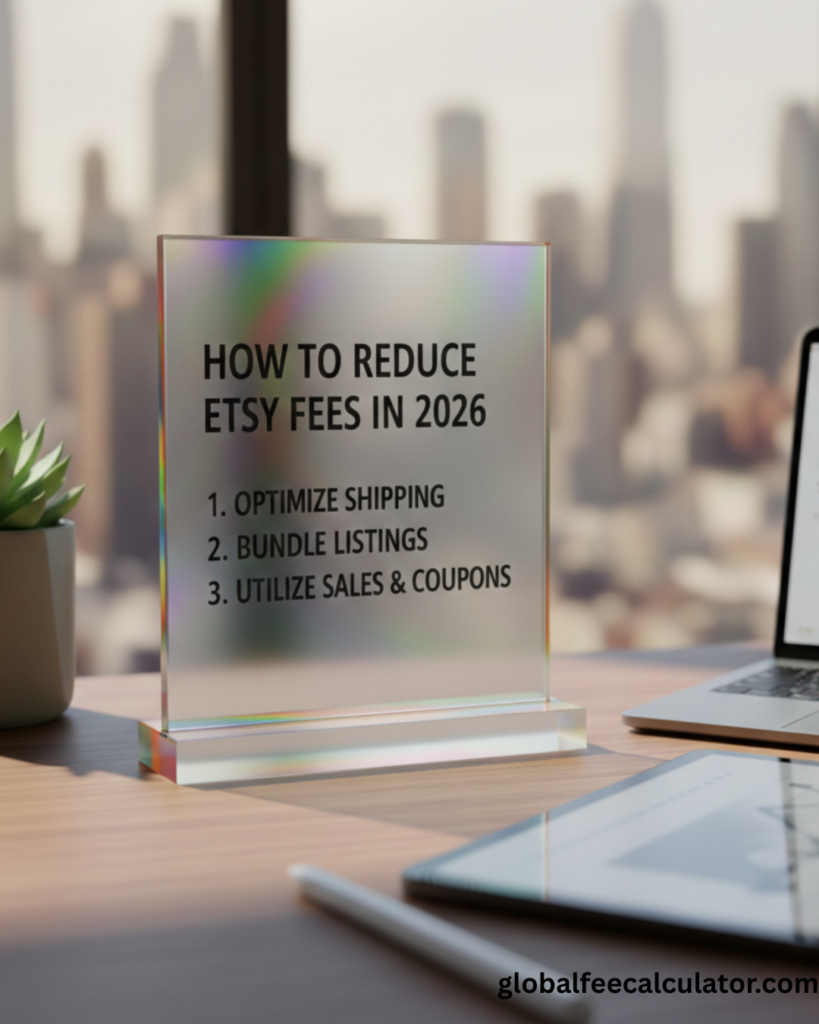
Legal Ways to Reduce Etsy Fees in 2026
1. Increase Average Order Value (AOV)
One of the simplest and most effective fee management tactics is to get customers to buy more per transaction.
Why this works
Fees are generally a percentage of the sale. If you sell more per order, fixed listing and transaction fees take up a smaller share of total revenue.
How to do it
-
Offer bundle discounts (e.g., “Buy 3, save 10%”)
-
Create tiered pricing or multi-item discounts
-
Suggest add-ons at checkout
A higher average order value spreads fees across more money, improving profit per order.
2. Use Renewal Timing Strategically
Etsy charges a small fee every time a listing expires or is relisted. If you’re relisting manually or letting items expire often, you might be paying more than necessary.
Strategies to reduce renewal costs
-
Schedule listings in batches rather than one at a time
-
Use Auto-Renew wisely (only for high-traffic products)
-
Track which items sell fastest and focus renewals there
The goal is to avoid unnecessary listing fees on products that sit too long without selling
3. Optimize Product Pricing to Cover Fees
Many sellers price products based on materials and labor without factoring in fees. The result? Margins that feel healthy on paper but are thin in reality.
Smart pricing tactics
-
Build Etsy fees into your base pricing
-
Use tiered pricing to protect margins on smaller items
-
Adjust prices seasonally or for peak demand
This isn’t “raising prices for no reason”—it’s ensuring your pricing reflects real costs, including Etsy’s.
4. Minimize Offsite Ads Fees
Etsy’s offsite ads can drive traffic and sales, but they also come with referral fees that vary based on whether the sale came from the ad.
Ways to reduce offsite ad fees
-
Choose who pays the ad fee (you or Etsy) based on performance
-
Exclude products that don’t convert well in ad previews
-
Use internal analytics to decide where ads actually pay off
If offsite ads aren’t producing profit after fees, reduce spend or focus ads on high-margin products.
5. Bundle Shipping or Offer Combined Shipping Discounts
Shipping can feel like a separate cost—but it affects fees too since transaction and processing fees apply to total order value including shipping in some cases.
Shipping strategies that lower effective fees
-
Create free shipping thresholds that incentivize larger carts
-
Offer combined shipping discounts for multiple items
-
Use calculated shipping to avoid overpaying
Higher cart totals reduce the fee percentage relative to total revenue.
6. Choose Your Currency and Payment Method Wisely
If you sell internationally, Etsy may convert currencies on your behalf, which can introduce extra costs.
Smart approaches
-
Set your shop to use your primary business currency
-
Monitor how currency conversion affects payouts
-
Adjust pricing for international audiences to include FX costs
This won’t lower Etsy’s fees directly, but it reduces the hidden costs that feel like fees.
7. Reduce Refund-Related Fee Losses
When you refund a sale on Etsy, not all fees are returned. The listing fee, transaction fee, and processing fee may remain deducted, depending on the situation.
Ways to minimize refund impact
-
Set clear return and refund policies
-
Encourage exchanges over refunds
-
Respond promptly to customer concerns to avoid refunds
Fewer refunds mean fewer unrecoverable fees.

8. Use Promotions and Coupons Strategically
Discounts attract customers—but if applied without planning, they shrink margins and magnify fee impact on net revenue.
Guidelines for smart promotions
-
Use promotions to increase cart size, not just to lower price
-
Pair discounts with add-on incentives
-
Track referral and repeat customer impact before promoting broadly
Strategic promotions can increase lifetime value, offsetting fees in the long run.
Using a tool to calculate Etsy fees accurately helps sellers test different pricing scenarios before making changes.
Common Fee Mistakes Etsy Sellers Should Avoid
Even experienced sellers make basic errors that cost money:
Mistake 1: Ignoring stacked fees
Counting only one fee (e.g., transaction fee) while ignoring others (listing, payment processing, advertising).
Mistake 2: Pricing without fee visibility
Setting prices based on competitors without calculating real cost after fees.
Mistake 3: Frequent unnecessary renewals
Relisting too often without sales performance insight.
Mistake 4: Overreliance on offsite ads
Spending on ads without a clear profit after referral fees.
Mistake 5: Treating shipping as unrelated
Ignoring that shipping and total order value can affect fees and margins.
Avoiding these common errors can significantly improve profitability
Recommended Tools to Reduce Etsy Fees
There are neutral tools designed to help Etsy sellers analyze and optimize fee costs. These calculators can:
Estimate total Etsy fees per order
Compare net profit by item and pricing strategy
Model promotions and pricing changes
Forecast profitability before listing or running ads
While tools don’t replace smart strategy, they improve fee visibility, which is often the biggest barrier to better margins.
In some cases, sellers evaluate Etsy vs Shopify cost differences to decide if switching platforms improves margins.
Final Summary
Etsy fees are a fact of marketplace selling, but they don’t have to be a mystery or a margin killer. In 2026, successful sellers legally reduce fees by:
Increasing average order value
Pricing products to absorb fees
Managing renewals strategically
Optimizing shipping and promotions
Using analytics and fee calculators
The difference between profitable Etsy selling and margin-squeezed selling isn’t luck, it’s fee awareness and intentional pricing strategy.
A deeper understanding of Etsy fee calculations explained step by step helps identify areas where savings are possible.
Frequently Asked Questions (FAQs)
1. Can I avoid Etsy fees completely?
No. Etsy fees are part of the marketplace model, but you can minimize their impact through pricing and optimization.
2. Do offsite ads always cost more?
Not always—but if they don’t generate profit after referral fees, they can reduce margins.
3. Should international sellers adjust prices?
Yes. International fees, currency conversions, and market expectations often require region-specific pricing strategies. Sellers in different countries may face different cost structures, making it useful to understand how Etsy seller fees differ internationally.
4. Do listing fees apply to renewals?
Yes. Every listing or renewal typically incurs a fee.
5. Do shipping discounts affect fees?
Shipping costs may affect total order value, which can indirectly influence the percentage of fees relative to revenue.
6. Is free shipping always better?
Not necessarily. Free shipping works when built into pricing or tied to higher cart values.
7. How often should I review Etsy fee reports?
Regularly—monthly or quarterly helps you catch trends early.
8. Do refunds return all fees?
Usually not. Some fees are non-refundable, especially payment processing and transaction fees.
9. Can pricing tools really help?
Yes. Fee visibility tools help you calculate profit accurately before listing.
10. Should selling fees influence product selection?
Yes. Knowing fee impact can help decide which products are worth selling
Recommendation:
Always verify details directly on the official company website before making any business or financial decision.