
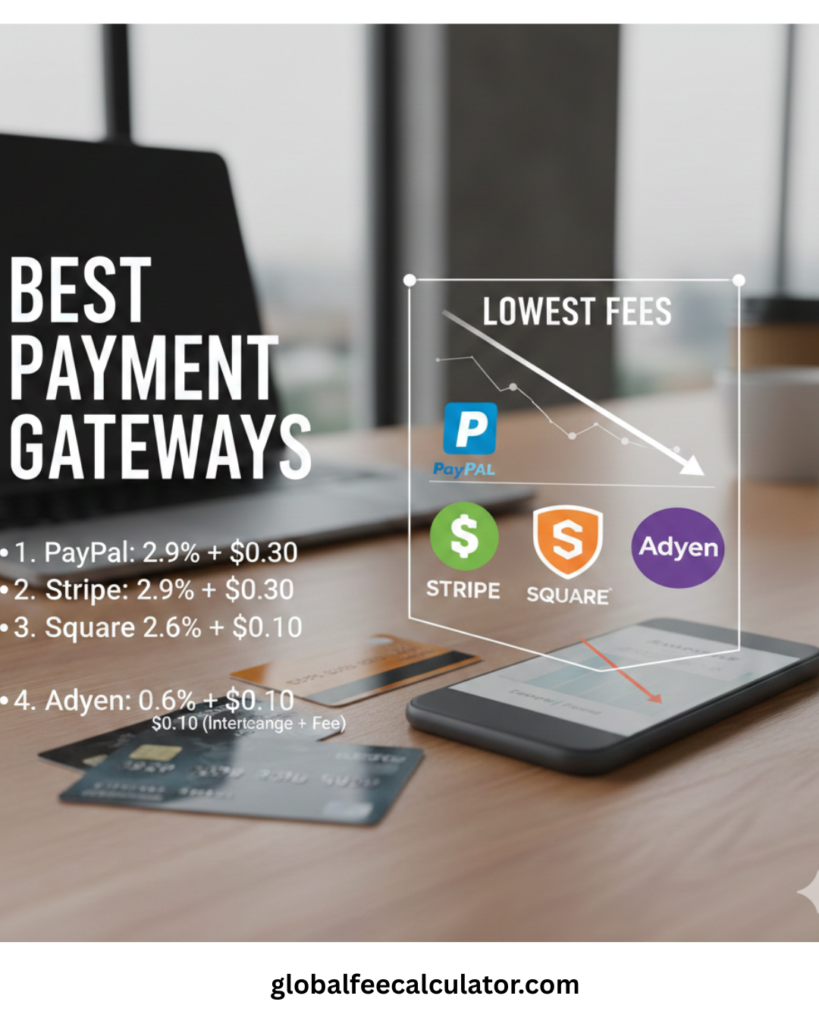
Choosing the right payment gateway can significantly reduce the cost of doing business online especially for sellers, small businesses, and eCommerce owners who care about margins. While most gateways charge fees for each transaction, some cost less than others thanks to lower percentage fees, reduced fixed charges, or unique pricing models tailored for high volume.
Below is a practical, business-focused comparison of payment gateways with the lowest transaction fees, what makes each one cost-effective, and when they make sense for your setup.
Table of Contents
ToggleWho This Guide Is For
This guide is ideal for:
eCommerce sellers comparing Stripe, Square, and alternatives
SaaS founders evaluating interchange vs flat-rate pricing
Small businesses looking to reduce transaction fees
International sellers concerned about cross-border costs
Subscription businesses optimizing recurring payments
If your business processes payments regularly, understanding fee structures can directly improve margins.
What “Lowest Transaction Fees” Really Means
Before diving into specific gateways, it’s important to understand what you’re comparing:
Percentage fee: The portion of each sale you pay (e.g., 2.7%)
Fixed fee: A flat amount per transaction (e.g., $0.10 or $0.30)
Interchange or interchange-plus pricing: Fees based directly on card network costs with minimal markup
Additional costs: Cross-border, currency conversion, and international fees The lowest fee structure varies depending on your business model (online store vs. in-person, domestic vs. international, low-average ticket vs. high-ticket sales)
There’s no “fee-free” payment gateway for businesses, because networks, banks, and processors all charge something—but some processors offer significantly lower effective fees than the more common flat-rate gateways
1. Helcim – Low Interchange-Plus Rates (Best for SMBs)
Why it’s among the lowest-fee options:
Helcim doesn’t charge a monthly fee and uses an interchange-plus pricing model, which means you pay the underlying card network fees plus a small markup that decreases as your processing volume increases. This often results in effective rates well below traditional flat-rate gateways.
Typical Fees
In-person: ~1.8%–2.0% + $0.08 per transaction
Online: ~2.27% + $0.25 per transaction
No monthly fee at entry level
Best for:
Small to medium online retailers, brick-and-mortar shops that also sell online, businesses scaling quickly
Why sellers choose it
Helcim’s pricing transparency and low break-even rates make it one of the most cost-effective gateways available for sellers who process a mix of online and in-person payments
2. Stax Payments – Interchange Only (Best for High Volume)
Stax uses interchange-only pricing with no additional markup on the standard interchange cost charged by the card networks. In practice, that means you pay only what the card networks charge, rather than a fixed percentage plus markup.
Typical Structure
Monthly fee: ~$99 (often offset at higher volume)
Transaction fee: Interchange cost only
No percentage markup
Best for:
High-volume sellers (e.g., $8,000+ per month), subscription platforms, marketplace operators
Why it’s cost-effective
When your volume is high, interchange-only pricing can be significantly cheaper than traditional gateways because you avoid the extra percentage markup on every sale

3. Square – Competitive Flat Rates (Best for POS + Online)
Square is a very popular all-in-one payment solution with flat transaction pricing and no monthly fees for basic plans. It’s not always the absolute lowest in fees, but for many small businesses it competes effectively because of simplicity and no surprises.
Typical Fees
Online/Ecommerce: ~2.6% + $0.10 per transaction
In-person: Often similar or slightly lower
Best for:
Retail, cafes, small merchants with both online and in-person sales
Why sellers like it
Square’s flat-rate simplicity, strong POS integration, and consistent fees make it an attractive choice for sellers who value ease alongside cost.
4. Braintree – Competitive Rates + Broad Features
Owned by PayPal, Braintree is a flexible payment gateway with features like recurring billing, digital wallets, and international support—all with competitive transaction processing rates that are often lower than default PayPal or Stripe pricing.
Typical Fees
2.89% + $0.29 per online transaction (standard)
Lower ACH (bank transfer) fees: ~0.75% capped at $5
Custom pricing available on request
Best for:
SaaS platforms, subscription businesses, international sellers
Why it’s cost-effective
Braintree’s base rate is often slightly lower than common flat-rate gateways, and its broader payment support (ACH, wallets) helps lower fees for certain transaction types
5. Razorpay, Cashfree, and Other Regional Low-Fee Gateways
In markets like India, regional players often offer lower transaction fees, particularly for domestic transactions, making them cost-effective for local sellers.
Examples
Razorpay: ~2% + GST for domestic cards; ~3% + GST international
Cashfree: ~1.75%–1.95% + GST domestic
Zoho Payments: 0%–2.75% depending on plan and methods
Best for:
Businesses with primarily domestic audiences in those regions
Why this matters
Regional gateways can be cheaper than global brands, especially when integrated with local payment methods like UPI or bank transfers.
6. Thoughtful Alternatives Based on Business Needs
Some gateways don’t necessarily have the lowest per-transaction fees, but they offer pricing structures that can reduce costs under the right conditions:
Adyen
A global processor with interchange-plus pricing that can be very competitive for large enterprises and international sales, but requires more setup and volume to be cost-effective.
Local Bank Merchant Accounts
Certain banks offer custom merchant accounts with very low processing fees if your business negotiates terms directly (typically requires volume and payment reliability). (Community reports)
Different pricing models—flat rate vs interchange-plus—are explained in detail in Stripe pricing models for businesses.
Factors That Influence “Lowest Fees” in Practice
1. Average Order Value
Fixed fees (like $0.10 or $0.30) take a bigger share of small transactions, which makes lower fixed components valuable.
2. Recurring vs One-Time Payments
For subscription businesses, lower percentages on recurring charges add up over time.
3. International & Currency Fees
Cross-border or currency conversion fees (often +1% or more) can make a cheap domestic gateway expensive globally. Sellers using Stripe should also understand how Stripe calculates transaction and international fees before switching.
4. Chargebacks & Refund Policies
Some gateways refund processing fees on disputes or have lower chargeback fees
Businesses using platforms like Stripe should also review how Stripe fees work in detail, including international and currency costs.
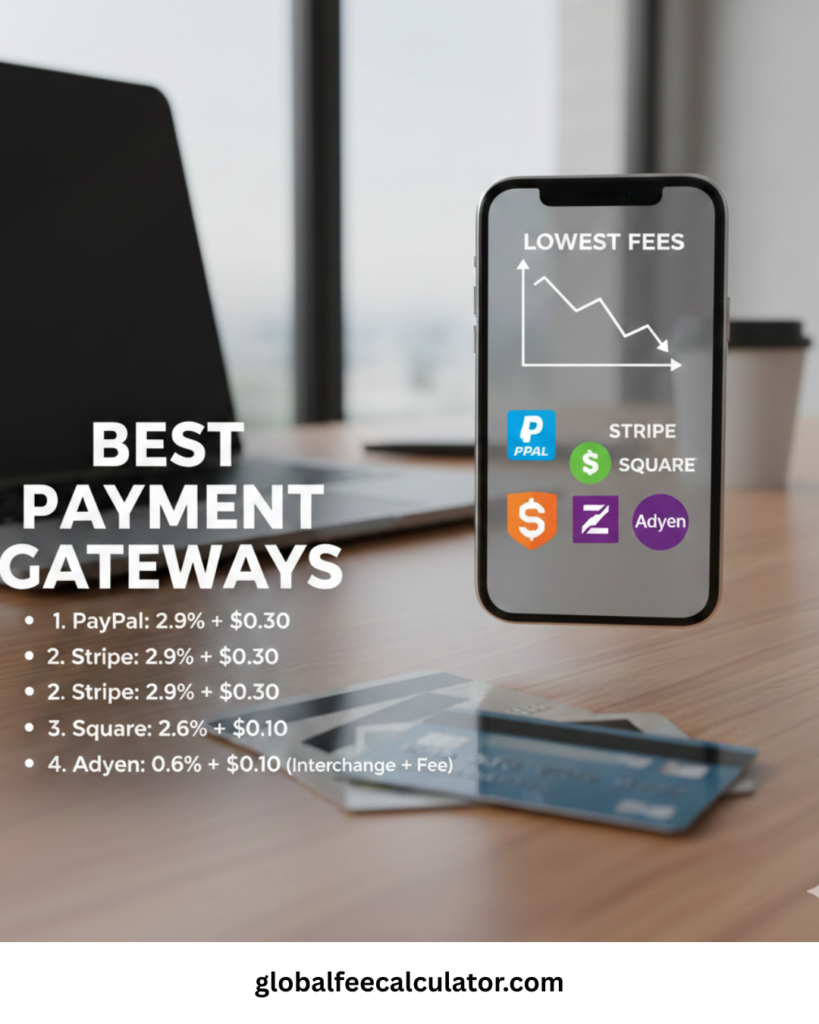
How to Choose the Right Low-Fee Gateway
Here’s a practical checklist:
✔ Know your sales model
Monthly subscriptions? Interchange pricing may help
Mostly in-person? Flat-rate POS solutions like Square may be ideal
✔ Understand your customer geography
Cheaper domestic gateways may not serve international buyers cost-effectively.
✔ Consider payment methods
Lower fees on ACH or local wallets can cut costs compared to card networks.
✔ Calculate effective fees, not advertised ones
Factor in currency conversion, cross-border, and fixed components.
Businesses already using Stripe can explore Stripe alternatives with lower fees.
Quick Comparison: Lowest Fee Payment Gateways (2026 Snapshot)
| Gateway | Pricing Model | Online Rate (Approx.) | Monthly Fee | Best For |
|---|---|---|---|---|
| Helcim | Interchange Plus | ~2.27% + $0.25 | No | SMBs |
| Stax | Interchange Only | Interchange Only | Yes (~$99) | High volume |
| Square | Flat Rate | ~2.6% + $0.10 | No | Retail + POS |
| Braintree | Flat Rate + Custom | ~2.89% + $0.29 | No | SaaS |
| Razorpay | Flat Rate (Regional) | ~2% + GST | No | India domestic |
Effective cost varies depending on volume, geography, and payment method mix. Always calculate based on your real transaction size and customer location.
Final Summary
There’s no one “cheapest payment gateway” for every business—but some providers consistently offer lower transaction fees for specific models:
Helcim: Low interchange-plus rates with no monthly fee
Stax: Interchange-only pricing great for high volume
Square: Competitive flat rates with POS + online
Braintree: Slightly lower online processing with flexible features
Regional gateways (e.g., Razorpay, Cashfree): Very low domestic costs in local markets
In general, low fees are just one factor. You should also balance ease of integration, feature set, and payment method support against cost. But for sellers focused on maximizing profits, choosing a gateway with lower effective fees can make a noticeable difference over time.
Platform fees should also be evaluated alongside Etsy vs Shopify transaction cost comparisons.
Frequently Asked Questions (FAQs)
1. Which payment gateway has the lowest fees?
There’s no universal lowest, but interchange-plus providers like Stax and Helcim often deliver effective fees below traditional flat rates.
2. Are there gateways with zero transaction fees?
No. All business payment processors charge fees because card networks and banks have costs.
3. Can I negotiate fees with payment gateways?
Yes—especially if you have high monthly transaction volumes or a reliable sales history.
4. Is a low percentage always better?
Not necessarily—fixed fees and additional costs (cross-border, refunds) also affect total cost.
5. Do regional gateways have lower fees?
Often yes, especially for domestic payments in markets like India.
6. Which gateway is best for global sales?
Global processors with wide currency support like Adyen or Braintree may be more cost-effective when international sales are significant.
7. Should I choose based on ease of integration?
Feature set and integration ease should be weighed alongside fees to ensure a smooth checkout experience.
Recommendation:
Always verify details directly on the official company website before making any business or financial decision.